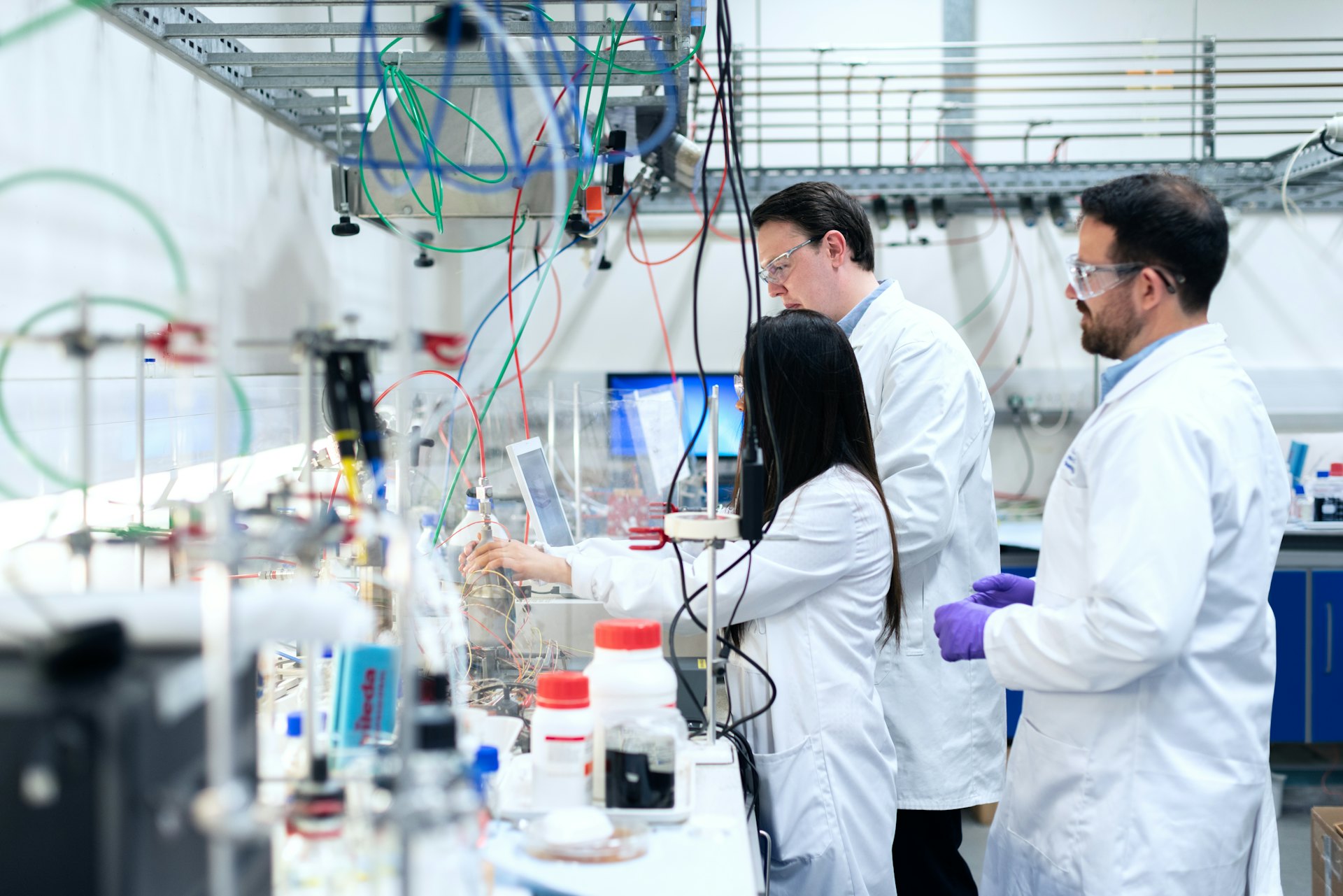
Advanced air filtration and air purification systems.
From air filters for building ventilation to HEPA and ULPA filtration for hospitals and laboratories and CBRN protection for defence — we stop what you cannot see.
Air quality depends on the right filters, correctly installed.
Fine dust, pollen, bacteria, viruses and PM2.5 particles easily pass through ordinary filters. An advanced air filtration system captures them in successive stages, up to 99.995% of particles.
We choose the filter class for the application: ISO ePM filters for office buildings, HEPA H13–H14 filters for operating theatres and cleanrooms, ULPA filters for the most demanding processes and activated-carbon filters for odours and gases.
Together with our partner Beth-El, a specialist in filtration and collective protection, we also deliver air purification systems and military-grade CBRN filtration.
 HEPA H14 · 99.995%
Air filters and filtration systems for every level of risk.
We supply, install, test and replace filters — and make sure unfiltered air never bypasses the filter at the edges.
Air filters for ventilation
Pre-filters and ISO ePM10, ePM2.5 and ePM1 fine filters for air handling units in offices, schools, hotels and retail spaces.
HEPA filters
High-efficiency H13–H14 filters for operating theatres, ICUs, isolation rooms, laboratories and cleanrooms.
ULPA filters
Ultra-fine U15–U17 filtration for microelectronics, pharmaceuticals and the most demanding cleanroom classes.
BIBO housings (Bag-In / Bag-Out)
Filter changes without exposing staff to hazardous contaminants — for biosafety laboratories and pharmaceutical production.
Air purification
Air purifiers and recirculation units with HEPA and activated-carbon filtration, for spaces without central ventilation or with extra requirements.
CBRN protection
Filtration units and collective protection against chemical, biological, radiological and nuclear agents, for shelters and command centres.
Where clean air is a requirement, not a bonus.
- Hospitals, operating theatres and isolation rooms
- Research and biosafety laboratories
- Pharmaceutical production and cleanrooms
- Food and electronics industries
- Office buildings, schools and kindergartens
- Government and defence facilities
Not just the filter — the whole system.
- Choosing the filter class for the application and regulations
- Supply and installation of filters and housings
- Integrity testing (DOP / PAO) for HEPA filters
- Differential pressure and particle measurements
- Periodic filter replacement, fully documented
About air filters and purification.
What is the difference between HEPA and ULPA filters?
HEPA filters (H13–H14) capture at least 99.95–99.995% of the most penetrating particles. ULPA filters (U15–U17) go further, up to 99.99995%, and are used in very high-class cleanrooms.
How often should air filters be replaced?
Pre-filters are typically changed every few months, fine filters once or twice a year, and HEPA filters when differential pressure reaches the manufacturer's limit. A maintenance plan sets the exact intervals.
Can an air purifier replace ventilation?
No. A purifier cleans the air in the room, but it does not bring in fresh air or remove CO₂. The best solution is ventilation with quality filters, with air purification added where it is needed.
What does CBRN protection mean?
CBRN protection filters the air against chemical, biological, radiological and nuclear agents and keeps the protected space under overpressure, so contaminated air cannot get in.
Need air filtration or purification?
Tell us what kind of space you have and what needs to be stopped. We will recommend the right filter class.